Category Archives: History

The Pilgrims, Squanto, & Big Data

In an era of “big data” with data-driven decisions and data-driven companies in vogue, one must wonder, what would have happened if the Pilgrims had had access to “big data”.  Would this had changed the course of history.  If the Pilgrims had predictive analytics that would have told them that it was likely that half of their group would perish by the end of their first winter in the new world, would they have come anyway?  Would Squanto have returned from the old world to his former village, if he could have predicted the spread of the small pox plague that wiped out his tribe?  Would my ancestors have come from Bavaria if they could have predicted what awaited them?

While I think the use of “big data” and more data-driven decisions is generally a good thing, I wonder how useful data-driven decisions are when making some of the biggest decisions in life.  In the past, in the absence of data, people have taken large risks based on faith which have changed the history of the world. If we become dependent on data to make decisions, will progress slow, will some of the world’s greatest advances or innovations be lost or delayed?

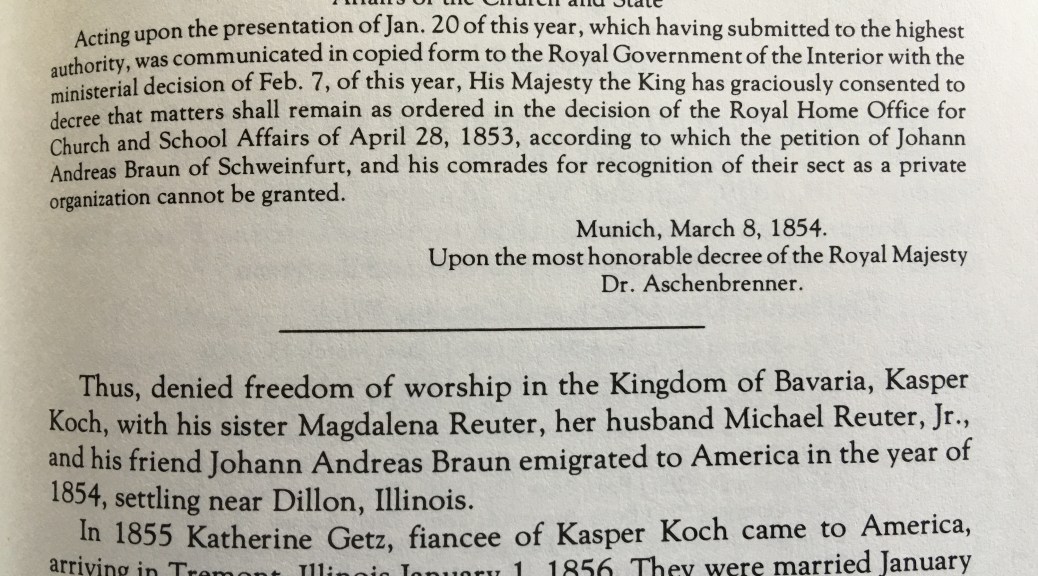
Like the Pilgrims, my ancestors left Europe due to religious persecution and came to the United States to worship in accordance with their beliefs.  I don’t know what options they may have had, but after the King of Bavaria turned down their final plea to worship separately from the sanctioned Catholic and Protestant state churches, they made the decision to immigrate to another country where they didn’t even speak the language.  I’m not sure that a data-driven analysis would have highlighted this option as a strategy destined for success, but for them it seemed to work.   I think the same is true for many longer term strategic decisions whether they be corporate or personal.  The risks and rewards are great.  There are many unknowns and there is little data to provide concrete direction.  Even with all the advances in big data and predictive analytics, it still takes faith and a vision to leave the familiar behind to do something completely new and different whether it’s venturing out to a new country or launching a new product.  So on Thanksgiving, I’m thankful for my great-great grandfather who left his home and immigrated to the “new world” even without big data and analytics to help him.
 

Superbowl Sunday Buffalo Chicken Wing Dip

Note: This is a blog post for my IST 600 Blogging for Information Professionals class; Keeley crackers do not exist, but the chicken wing dip recipe is real (and delicious); substitute Ritz crackers for “Keeley” crackers and you’ll still have an excellent experience.

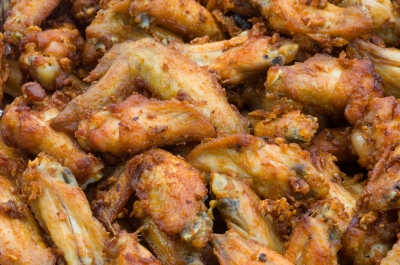
Chicken Wings
Image: FreeDigitalPhotos.net 

Although there are several versions of the story of the origin of Buffalo Chicken Wings, the most common one told in Central New York goes like this:  One night in 1964, Teressa Bellisimo’s son brought some friends over.  When hunger pains struck the crowd, Teressa quickly improvised by using what ingredients she had on hand.  She broiled some chicken wings and sprinkled them with hot sauce.  As a side, she served celery sticks with blue cheese dressing as a dip.  This, of course, occurred in Buffalo, New York; hence, the name “Buffalo” Chicken Wings was born.   In preparation for your next Superbowl party or other celebration, try this new spin on an old favorite:

Buffalo Chicken Wing Dip Recipe

Ingredients:
3 Chicken Breast Halves
2 Packages of Cream Cheese (at room temperature)
1 Cup of Cheddar Cheese
1 Cup of Frank’s Red Hot Sauce

Instructions:
Boil chicken then chop chicken in food processor. Pour chopped chicken into a bowl. Mix in cream cheese, cheddar cheese, and Red Hot Sauce. After all ingredients are mixed well, pour mixture into a 9″ x 9″ baking dish. Bake at 350 degrees Fahrenheit for 30 minutes.

Spread dip on Keeley Krackerz and eat.  It’s even better than the original!  Try them for your next Superbowl party or family get together.

Amelia Earhart’s Fate: New Clues 75 Years Later

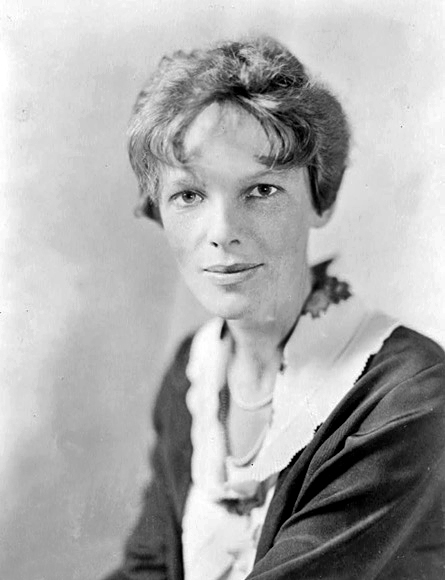
Amelia Earhart
Amelia Earhart (Source: Wikimedia Commons)

The International Group for Historic Aircraft Recovery has announced that it has discovered evidence of 57 transmissions that could have been made by Amelia Earhart and her navigator, Fred Noonan, after their plane disappeared over the Pacific Ocean in 1937.  The group made the announcement at the beginning of a three day conference dedicated to determining the fate of Earhart, Noonan, and their Lockheed Electra aircraft.  They theorize that Earhart was able to land on an uninhabited island in the Western Pacific  and radioed for help until the plane was swept out to sea.  Consequently, when U.S. Navy search planes flew over the island, the plane was not spotted.

A recent discovery of an old jar of anti-freckle cream on Nikumaroro Island (a.k.a Gardner Island) is thought to have belonged to Earhart and has lent support to this theory.  On July 2, the 75th anniversary of Earhart’s disappearance, the International Group for Historic Aircraft Recovery will launch their ninth expedition to Nikumaroro Island seeking additional evidence to confirm their theory.