The Pilgrims, Squanto, & Big Data

In an era of “big data” with data-driven decisions and data-driven companies in vogue, one must wonder, what would have happened if the Pilgrims had had access to “big data”.  Would this had changed the course of history.  If the Pilgrims had predictive analytics that would have told them that it was likely that half of their group would perish by the end of their first winter in the new world, would they have come anyway?  Would Squanto have returned from the old world to his former village, if he could have predicted the spread of the small pox plague that wiped out his tribe?  Would my ancestors have come from Bavaria if they could have predicted what awaited them?

While I think the use of “big data” and more data-driven decisions is generally a good thing, I wonder how useful data-driven decisions are when making some of the biggest decisions in life.  In the past, in the absence of data, people have taken large risks based on faith which have changed the history of the world. If we become dependent on data to make decisions, will progress slow, will some of the world’s greatest advances or innovations be lost or delayed?

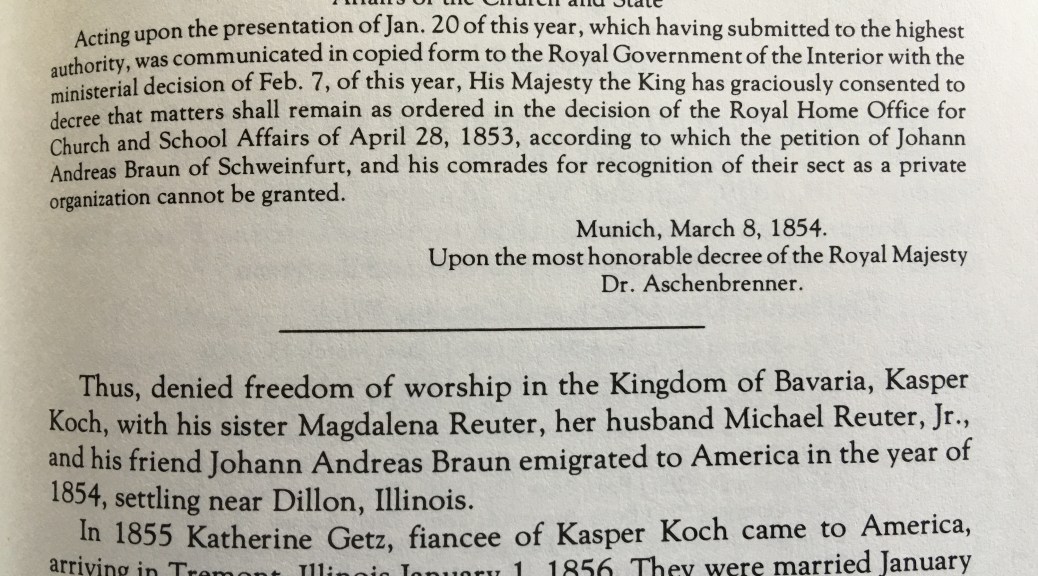
Like the Pilgrims, my ancestors left Europe due to religious persecution and came to the United States to worship in accordance with their beliefs.  I don’t know what options they may have had, but after the King of Bavaria turned down their final plea to worship separately from the sanctioned Catholic and Protestant state churches, they made the decision to immigrate to another country where they didn’t even speak the language.  I’m not sure that a data-driven analysis would have highlighted this option as a strategy destined for success, but for them it seemed to work.   I think the same is true for many longer term strategic decisions whether they be corporate or personal.  The risks and rewards are great.  There are many unknowns and there is little data to provide concrete direction.  Even with all the advances in big data and predictive analytics, it still takes faith and a vision to leave the familiar behind to do something completely new and different whether it’s venturing out to a new country or launching a new product.  So on Thanksgiving, I’m thankful for my great-great grandfather who left his home and immigrated to the “new world” even without big data and analytics to help him.
 

Privacy vs. Convenience on the Internet

I have always pretty much assumed that there is no privacy on the internet.  Consequently, I try to be careful about what I share in real-time on social media, and I especially try to minimize the amount of information that I give to Facebook, because frankly, I trust them very little.  Yes, I realize that my friends won’t be reminded of my birthday and won’t be posting happy birthday wishes on my wall, but, no, Facebook, you can’t have my birth-date.  That said, I’m more than happy to give away my location and private information if I trust an organization and I’m promised a discount or a more convenient customer experience.

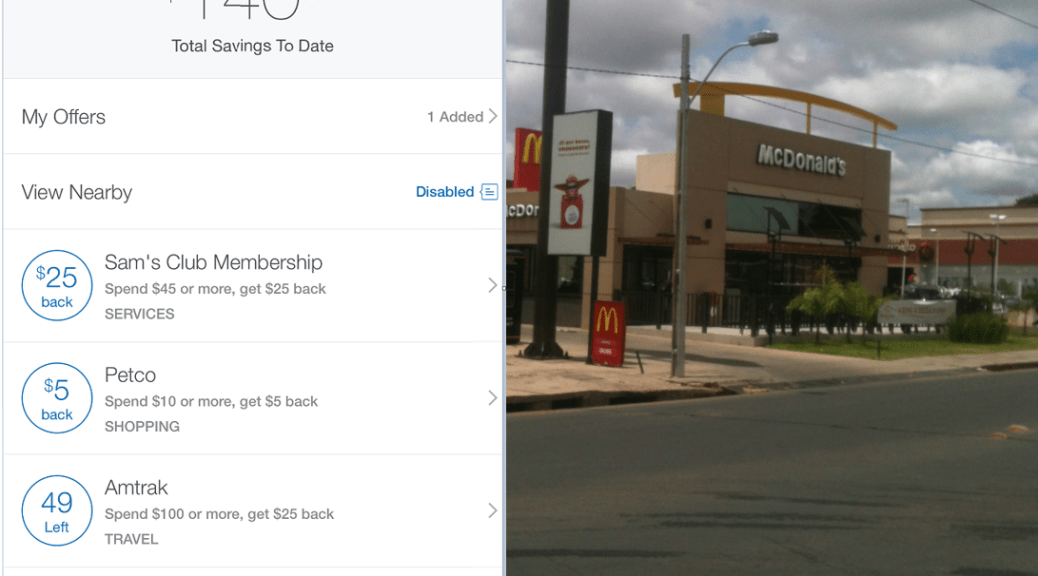
Recently, my credit card offered me a discount at a restaurant that I could load to my credit card app.  After I loaded the discount to my app, I promptly forgot about it.  Several weeks later, as I was driving across town, my smartphone “dinged” notifying me that I hadn’t used my discount and that I was near a restaurant where my discount could be used.  I was initially impressed; however, because it was already after 1 p.m., I had previously eaten elsewhere.   Had my app notified me before I ate, when I first entered into a 2 to 5 mile radius of the restaurant, it would have been much more helpful than notifying me later in the day when I was within 500 feet of the restaurant.  So I gave up a portion of my privacy by allowing the app to track my location, but I didn’t receive the intended reward for doing so.  In general, this illustrates what I feel is currently the poor return on investment that I receive when I exchange my privacy for discounts or convenience on the internet.  I usually end up feeling cheated.

Yet, I keep trying.  Somehow, someday, I think, a merchant will “wow” me with a wonderful deal or experience because of customer information that I have shared with them.  Sadly, I am still waiting for that day.

The Day I kept a Digital Diary

For a class assignment this week we were asked to keep track of our media use, and record observations about our digital consumption for an entire day.  My results were rather disturbing, at least to me.  I was working from home on this particular day, so I was already guaranteed to spend eight hours or more on my laptop consuming and regurgitating email with occasional “breaks” for meetings via conference calls.  Indeed, I was on my laptop most of my day, and even when I was on conference calls, I was simultaneously typing meeting minutes if I was running the meeting or trying to sneak in snatches of other work if I was listening to a call that someone else was leading.  In spite of the many studies showing that multitasking is not possible, I still have a difficult time fighting the illusion that I’m being more productive by attempting two or more things at once.  So while I’m creating a document on my computer and concurrently taking a conference call, my computer or phone may beep with an instant message, text, or another phone call that suddenly demands my attention as well.  By the end of a day like this, I often feel like I have a bad case of ADHD.  I have difficulty concentrating on a single task for long and I feel physically and emotionally exhausted even though I haven’t moved from my chair for much of the day.

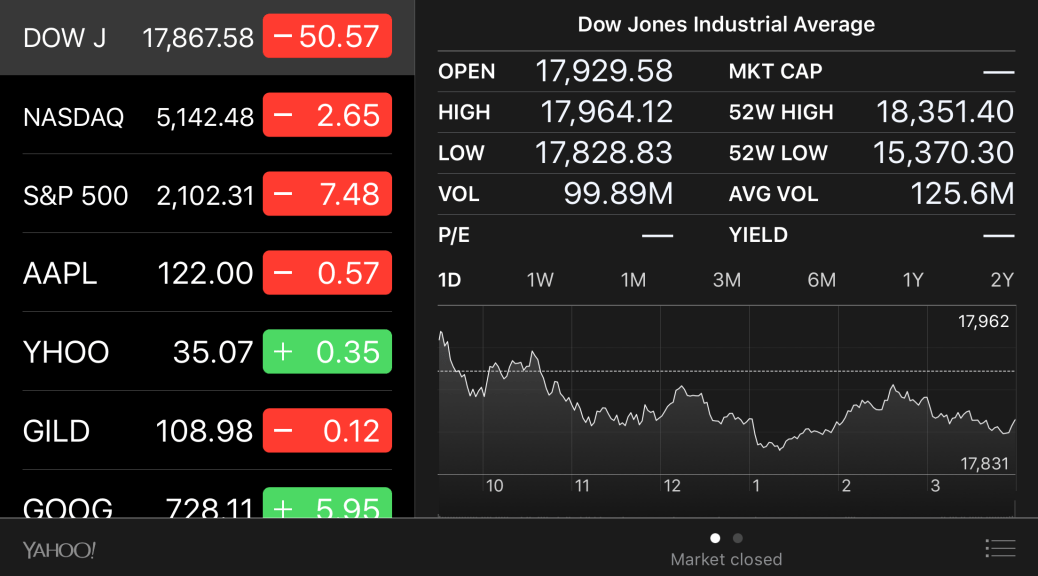
Another thing that I noticed was how often I became distracted by my smartphone.  When I would complete a task, my tendency was to reward myself by checking the news, my investments, or my email on my smartphone.  Unfortunately, it didn’t stop there.  Usually, as I was rewarding myself with one of these, I would find myself drawn into something else.  For example, a quick glance at my stock market app would show that the market was declining.  Then, I’d want to know why it was declining, so I’d open my Wall Street Journal app to find an article explaining the current direction of the market.  Then I’d be distracted by a second article or by a new notification pinging my phone and I’d be off on a completely different tangent.  At one point, a two second glance at my stock market app turned into a 15 minute time wasting odyssey.

Since the day that I recorded my digital consumption habits, I have thought about what steps I could take to overcome some of these habits that were decreasing my productivity.  I have found that I can avoid a lot of wasted time just by keeping my smartphone out of sight and further than an arm’s length away.  When I don’t have it in my line of sight or if I have to get up and walk across the room to access it, I am much less likely to be drawn into a pattern of mindlessly skipping from app to app searching for fresh content as a reward.  I haven’t found a way to eliminate multi-tasking completely, because assigning someone else to take meeting minutes for me still feels like doling out cruel and unusual punishment.  Nevertheless, by restricting myself to a single screen at a time, I have found that I can reduce my stress level and most likely improve my productivity at the same time.